Why Ontario Still Needs School Trustees
I became a school trustee almost by accident. I was a parent who read an article about a nearby special-needs high school — one I’d passed for years without understanding what happened inside. That article led to a visit, then a role on the parent council, and eventually to four years serving as an elected trustee. What I learned in that role is the value of an elected position I previously knew little about.
What I saw in that school changed my life. Teachers who loved their students fiercely. Educational assistants who de-escalated crises with patience and humour. Kids who had slipped through the cracks of a one-size-fits-all system finally found friends, confidence, and belonging.
Within a few months, I was running for school trustee. A year after that, I was being sworn in.
I didn’t grow up dreaming about politics. I didn’t even know what a trustee did until local schools started disappearing en masse. But serving as one became the most meaningful professional experience of my life.
Trusteeship is grassroots democracy in its purest form.
It’s answering emails at midnight, meeting parents at coffee shops, volunteering at school fundraisers, reading a story to a kindergarten class, speaking at graduations, and really listening to families who feel unseen. Trustees don’t have staff or speechwriters. Most work full-time jobs and do this on top of raising kids.
They do it because they care.
Which is why the Ontario government’s mention of eliminating school trustees is troubling.
Trustees have existed in this province for more than 200 years, dating back to the early 19th century. They weren’t created as political ornaments, but rather because communities needed advocates who understood their neighbourhoods, their histories, and their children. Trustees keep schools grounded in the real lives of the people they serve.
Abolishing an entire system of local representation is a blunt response to a complex problem. When accountability breaks down, it is more often because decisions are pushed upward, away from the communities most affected by them. Centralizing authority may simplify governance, but it rarely improves accountability.
One of the most powerful parts of serving was sitting around a table of eleven trustees, each with wildly different life experiences. Rural, urban, special needs parent, grandparent, school bus driver, coach, business owner. We’d read the same staff report and each saw something different — a blind spot others hadn’t noticed.
That diversity made decisions better. It made students safer. It made the system more humane.
Without trustees, who advocates for children who are suspended either because they need specialized supports or because they are bored and need gifted enrichment? Who pushes back when a community school is quietly placed on the chopping block? Who bridges the gap between parents, educators, and senior administration when something goes wrong?
Trustees are the connective tissue of public education. Remove them, and you remove the community’s voice.
People often told me that trusteeship was a stepping stone to “real” politics. I always laughed at that. Trusteeship is real politics — the kind that happens in cafeterias and gymnasiums, not marble hallways. The kind where the people you serve aren’t abstract numbers but actual neighbours.
I hope 2022 wasn’t our last school board election. Campaigns themselves serve a purpose. When dozens of candidates across a city knock on doors, debate publicly, and share lived experiences, they surface concerns and ideas that might otherwise go unheard. Those conversations give whoever is eventually elected a broader, richer understanding of the challenges facing families — not just in their own neighbourhoods, but across the entire system. That democratic stretch is valuable. Losing it would shrink our collective perspective.
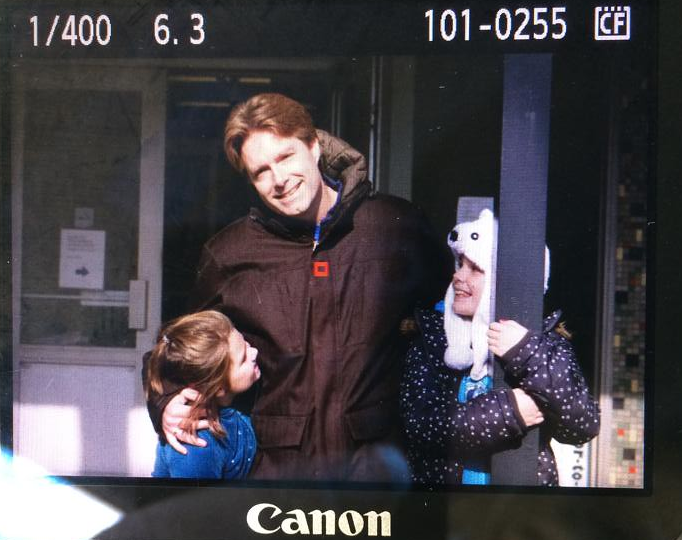
When my own daughters ask why I still care so much, years after leaving office, I tell them the truth:
Because once you’ve seen what a school can mean to a child who feels discarded, you never forget it.
Because democracy shrinks every time representation is removed.
Because trustees were created to make sure every family — especially the vulnerable ones — has someone at the table fighting for them.
That’s what trustees do. Quietly. Locally. Relentlessly.

Cover photo by Joanna St. Jacques